


 Download the report
 Share
Share





 Facebook
 LinkedIn
 X
X Whatsapp
 Email
EmailSustainability
Building Towards 2030
From the outset, Jardines has applied a long-term perspective to growth, building resilience in our portfolio and thriving with the communities we serve. We see sustainability as a strategic driver of long‑term value.
Our sustainability strategy, Building Towards 2030, structures the Group’s response to social and environmental megatrends affecting the outlook of our portfolio companies and the communities they serve. Each portfolio company develops its own sustainability agenda, aligned with the Jardines framework, and tailored to the unique characteristics of their respective industries, geographies and operating context. This approach ensures that sustainability is not only consistent across the Group but also relevant and impactful within individual sectors and our portfolio companies’ local geographies.
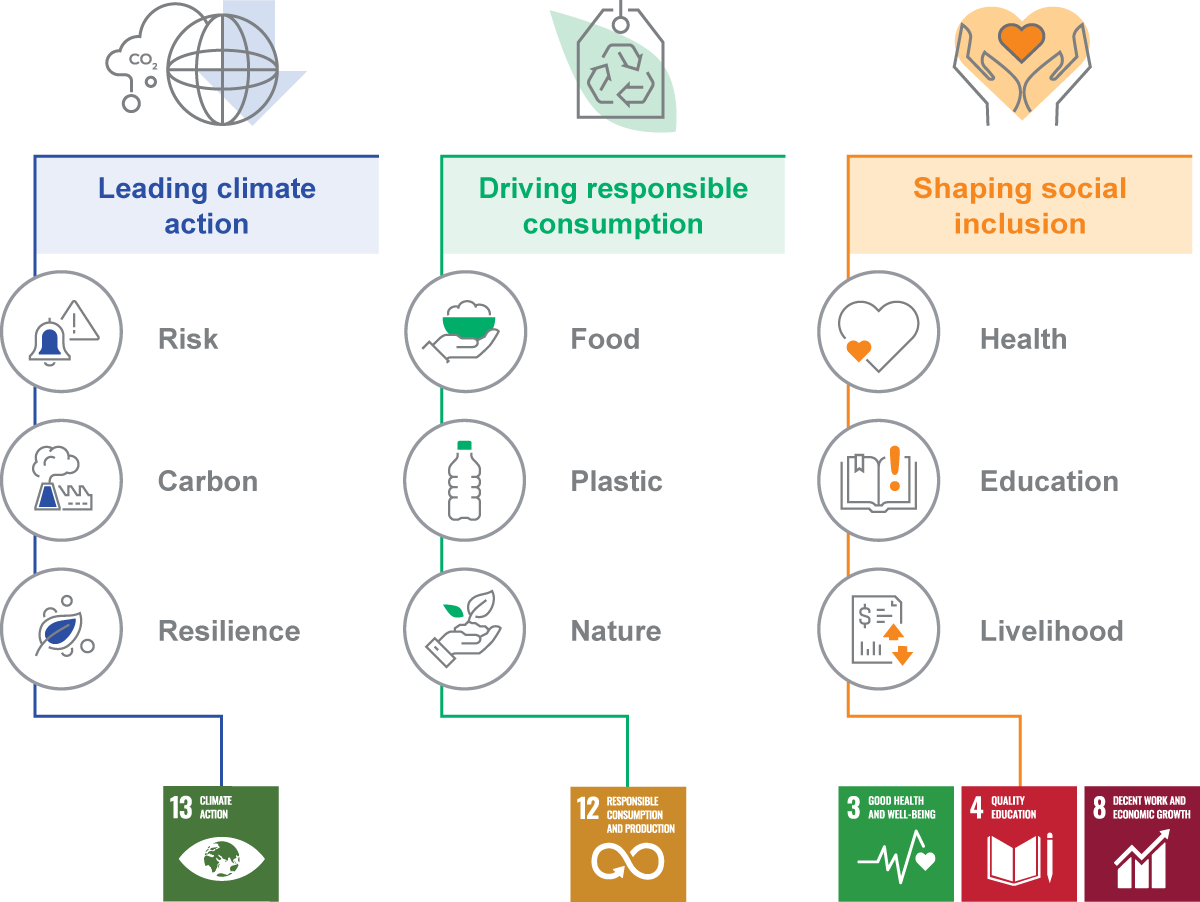
The strategy has nine focus areas across three strategic pillars: Leading Climate Action, Driving Responsible Consumption and Shaping Social Inclusion. It is aligned with five of the 17 United Nations Sustainable Development Goals (UNSDGs).
Sustainability governance at the Company
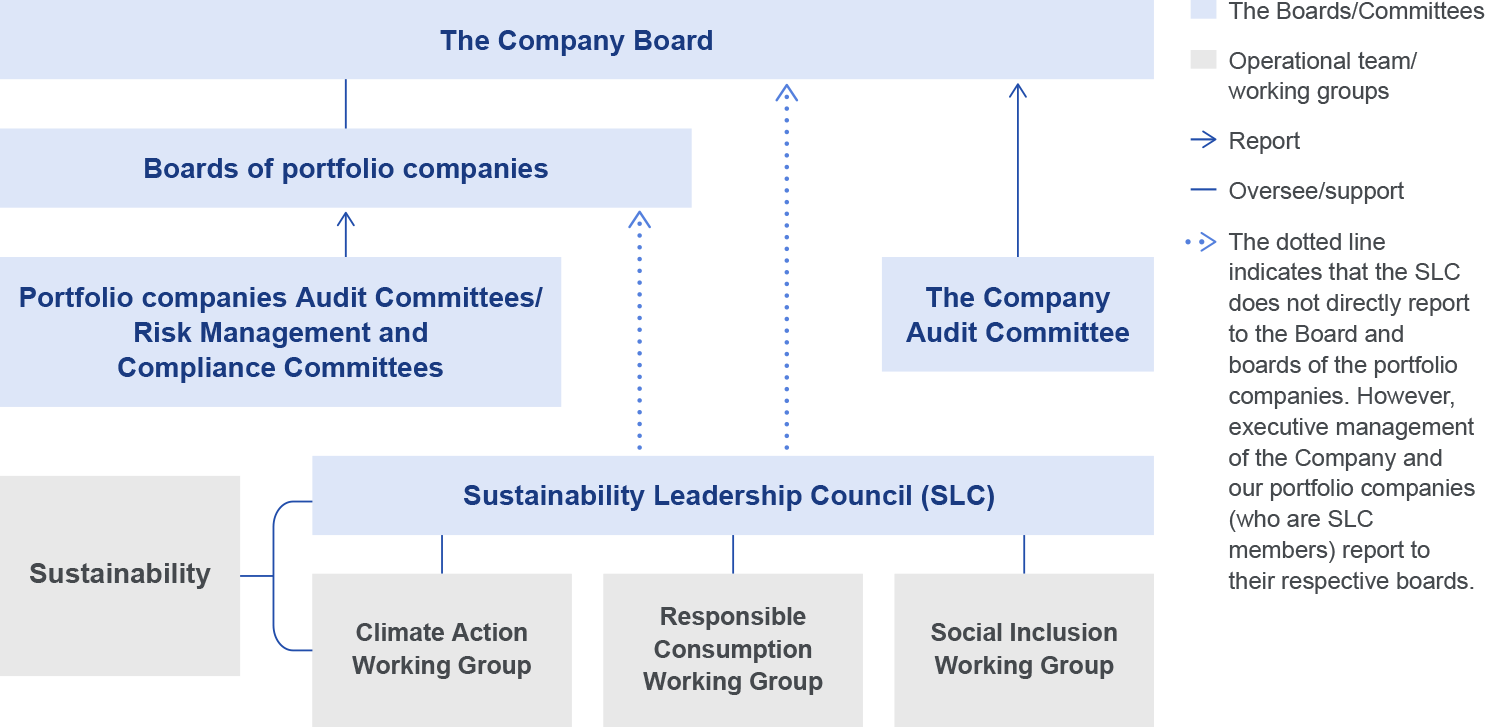
Integrating sustainability within our existing corporate governance structure enables strategic oversight, accountability and necessary reporting. The Company’s Board and Audit Committee, which have oversight of sustainability matters, are supported by day-to-day supervision by senior management. This structure is complemented by strong engagement with portfolio companies through the Sustainability Leadership Council (SLC) – which brings together the chief executives of our principal companies and Jardine Matheson directors and senior executives – as well as by working groups focused on each pillar of our sustainability strategy. Jardine Matheson’s Sustainability team works closely with all sustainability representatives from across our portfolio companies.
The Company Board
Sustainability is a regular agenda item at the Company Board and the boards of our portfolio companies. Items including progress on sustainability objectives and targets, ESG data performance, ESG ratings and upcoming priorities were reported to the Board in 2025.
Jardines’ representatives on the boards of our portfolio companies emphasise the strategic significance of sustainability to Jardines, ensuring that our commitment to sustainability, including climate action, is consistent across the Group and informs major business decisions. For details of the Board composition and responsibilities, please refer to the Corporate Governance section of this Report.
The Company Audit Committee
The Company Audit Committee supports the Board in overseeing and evaluating the Group’s principal risks and uncertainties, including climate risks. The Audit Committee also reviews independent external assurance in respect of the key sustainability metrics which measure the Group’s sustainability strategy, initiatives and goals, as disclosed in the Company’s annual Sustainability Report.
We have strengthened the governance of ESG data and the climate risk management reporting process at the Audit Committee. This ensures that ESG data, along with sustainability and climate risks, are reported and discussed at the committee level before publication. The upcoming IFRS sustainability-related financial disclosure requirements, along with the preparation plans for compliance, were presented to the Audit Committee in 2025.
For details of the Audit Committee’s role and responsibilities, please refer to the Audit Committee section of this Report.
Sustainability team
The Jardines Sustainability team supports the integration of sustainability considerations into the Group’s broader business strategies and operations, and provides ongoing advice and support to the portfolio companies. Collaborating closely with various stakeholders, the team also implements sustainability initiatives and sets appropriate and relevant ESG metrics and targets to track progress on material ESG issues. Sustainability trends are regularly monitored and are incorporated into the Group’s approach to ratings, reporting and disclosures.
Engaging the portfolio companies
The boards of the portfolio companies are responsible for overseeing their sustainability strategies, which are aligned with the Group’s overall framework. The leadership of each of the portfolio companies should also establish appropriate sustainability metrics and targets, reporting progress on material issues to their respective boards.
The audit committees are responsible for sustainability and climate-related risk management, as part of the enterprise risk management process. They also have oversight of ESG data performance and its assurance process, if applicable.
Sustainability Leadership Council
The SLC is led by Jardine Matheson Executive Chairman, Ben Keswick. It currently comprises more than 20 members including Jardine Matheson’s Chief Executive Officer, Executive and non-Executive Directors, chief executives of the portfolio companies and the heads of relevant functions. Meeting twice annually, the SLC serves as a collaboration platform for senior management across the portfolio to align and coordinate the Group’s sustainability efforts, embedding sustainability as a strategic value driver, while ensuring consistent integration of sustainability considerations into corporate policies and business operations.
Remark:
For details of the Risk Governance Structure, please refer to the Risk Management and Internal Control section.
Sustainability Working Groups
Designated working groups support each pillar of the Group’s sustainability strategy. They comprise of the Jardine Matheson Sustainability team and colleagues from portfolio companies who are responsible for driving the various aspects of their sustainability agendas within their organisations. The working groups seek to identify, develop and recommend initiatives which will create synergies and strengthen cohesion and cooperation among the portfolio companies.
Stakeholder engagement and materiality assessment
We engage regularly with stakeholders to communicate our sustainability ambitions and progress, gather feedback to understand perspectives and expectations on key issues, and inform on our strategy, performance and disclosures.
We conduct peer benchmarking and keep abreast of the latest global reporting standards and environmental and social megatrends material to the Group. This helps us continuously review and enhance our sustainability strategy.
Climate action
With the Group’s support, guidance and oversight, our portfolio companies continue to build climate resilience and execute their strategies.
Governance
The Jardine Matheson Board is responsible for the overall strategic aims and objectives of the Company. A Sustainability update is an agenda item at Board meetings at least once a year when the Board is informed about climate-related issues, including climate-related strategy, decarbonisation targets, initiatives and progress, challenges and opportunities.
Review of climate risks and opportunities is an integral part of the Group’s risk management process. Climate change is considered as one of our Principal Risks and Uncertainties. Potential consequences of major types of climate risks and opportunities faced by the Group and their latest developments and progress of mitigation measures, are reported to the Audit Committee bi-annually, and reviewed by the Board. Listed subsidiaries also present climate risks, as well as the results of integration of climate risks into existing enterprise risk management process to their audit committees.
The Company and portfolio companies’ senior representatives provide corresponding updates on sustainability strategy to their respective boards. The Jardines Sustainability team, led by the Head of Corporate Affairs and Sustainability, supports the Company Board in developing the overall sustainability strategy and related initiatives.
Strategy
Our Group commitment to climate action is set out in the Group Climate Change Policy. The policy outlines the principles that steer the Group and our portfolio companies to build resilience to climate change impacts and the transition to a low-carbon economy. As a responsible Asia-based investment company we want to contribute to an orderly and equitable transition. Jardines has published a commitment to Supporting a Just Energy Transition, affirming our goals of scaling up investments in renewable energy and adjacent innovations, diversifying into non-coal mineral mining and not investing in new coal mines or coal-fired power plants.
We have been engaged in an ongoing exercise to identify and analyse material climate risks and opportunities across the portfolio under different climate scenarios in three time horizons: short-term (within three years), medium-term (four to ten years) and long-term (beyond ten years). These time horizons are longer than the horizons adopted in assessment of broader enterprise risks as climate risks may materialise over a longer time horizon compared to other principal risks.
In 2021, we completed a study of physical risks likely to have a material impact on the Group’s significant assets, evaluating potential asset damage and business interruption. We analysed the exposure and impact of both acute1 and chronic2 hazards on more than 800 assets across our portfolio companies in 22 countries and regions. These assets represented the most significant operations, in terms of revenue, net asset value or strategic location. The study was conducted utilising three Representative Concentration Pathways (RCPs), presenting low-emissions, medium-emissions, and high-emissions scenarios. The scenarios are adopted and standardised by the Intergovernmental Panel on Climate Change (IPCC)3, enabling us to compare our climate risks across three plausible climate outcomes.
In 2022, Jardines initiated an assessment of transition risks which might impact our portfolio companies. The exercise aimed to develop a consistent set of scenarios and assumptions for risk assessment, setting the foundation for a robust methodology which would result in comparable outcomes across the portfolio. Two consolidated scenarios were developed based on internationally recognised data sets4 to allow for a systematic analysis of two contrasting sets of political, technological, and socio-economic parameters, thereby understanding our resilience to various extremes:
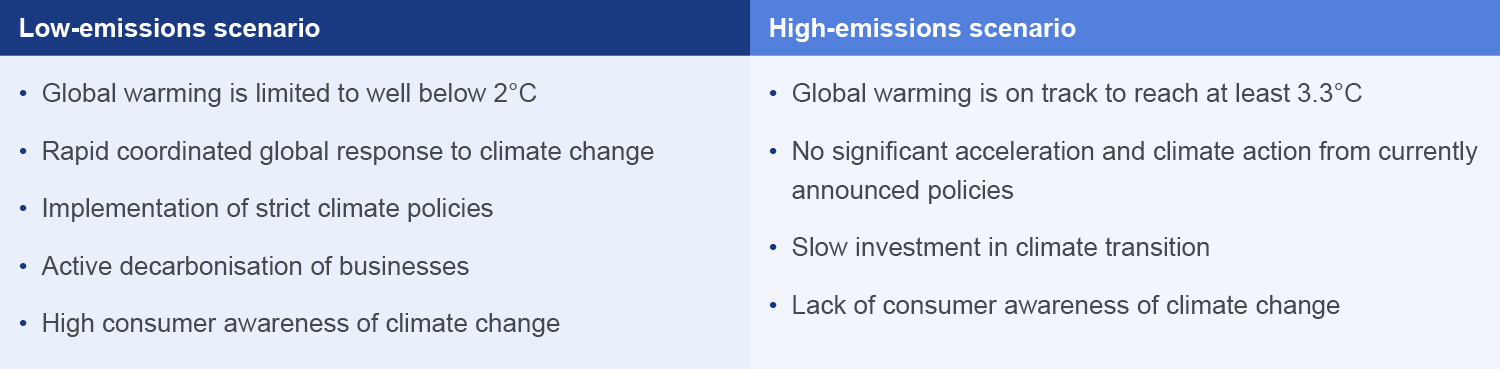
These scenarios will be periodically refreshed to align with climate science updates and significant changes in our operating environments. We have reviewed the policy and regulatory changes, analysed the impact on our portfolio companies, and concluded that a full reassessment of climate scenarios is not yet necessary.
The assessment produced distinct transition risk heat maps for the High-emissions and Low-emissions scenarios, identifying the critical impact of transition risk drivers across the diverse sectors of our portfolio companies in their most material geographic regions, based on revenue and/ or strategic value. A number of sector-specific mitigation planning workshops have been conducted to equip the portfolio companies with the knowledge and resources for climate resilience.
Currently, we are unable to quantify the financial effects of the climate risks and opportunities because the effects are interconnected with those of existing business risks rather than being separately identifiable. The financial impact is also subject to a high level of estimation uncertainty as reliable data in the market is still lacking.
1Acute hazards include landslide, rainfall flood, river flood, storm surge and typhoon.
2Chronic hazards include extreme heat, snow melt, drought and sea level rise.
3RCP 2.6 represents a low-emission scenario, RCP 4.5 represents a medium-emission scenario and RCP 8.5 represents a high-emission scenario.
4Scenarios are based on the IPCC RCP 2.6, 8.5, SSP1 & SSP5, the Network for Greening the Financial System (‘NGFS’) Orderly Pathways & Hot house World, and the International Energy Agency (‘IEA)’ Sustainable Development Scenario & Stated Policy Scenario, supplemented by additional research to reflect the unique regional context.
Physical risks under the high-emissions scenario
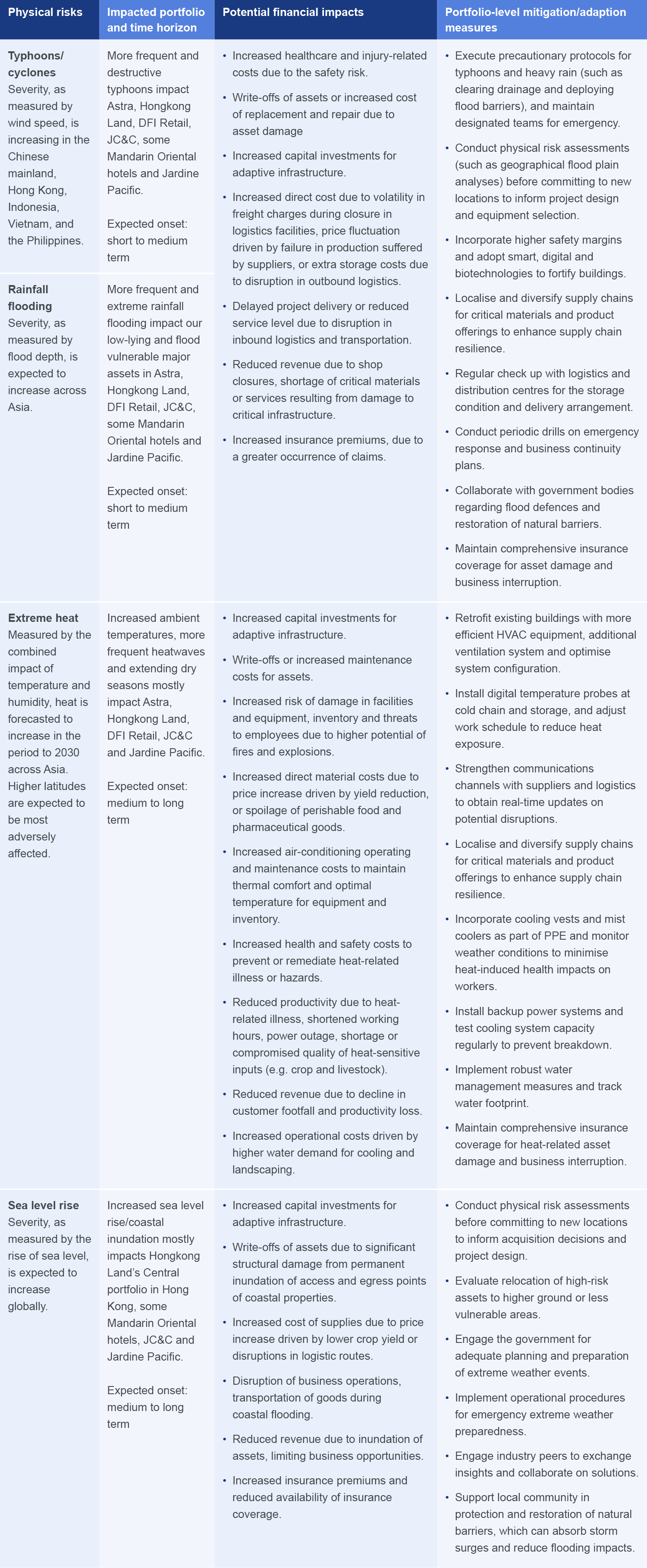
The assessment of physical risks was based on the assumptions where there is a higher warming outcome due to delay in climate change mitigation, leading to more frequent and severe physical impacts to our portfolio. The financial impacts of physical risks are anticipated to be more significant in the high-emissions scenario.
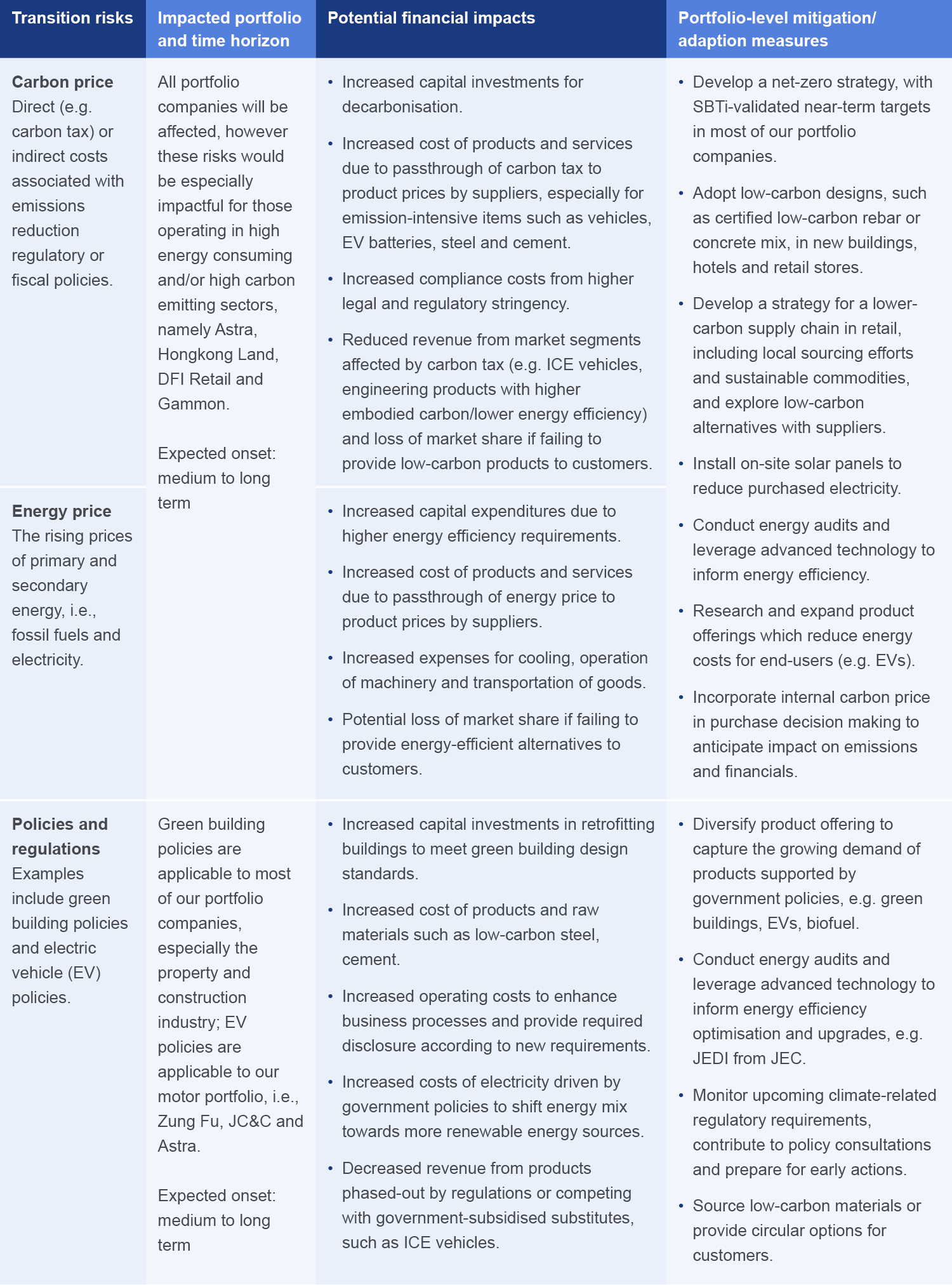
Transition risks under the low-emissions scenario
The assessment of transition risks was based on the assumptions where there are stricter climate change policies and stronger demand in climate change adaptation. The financial impacts of transition risks are anticipated to be more significant in the low-emissions scenario.
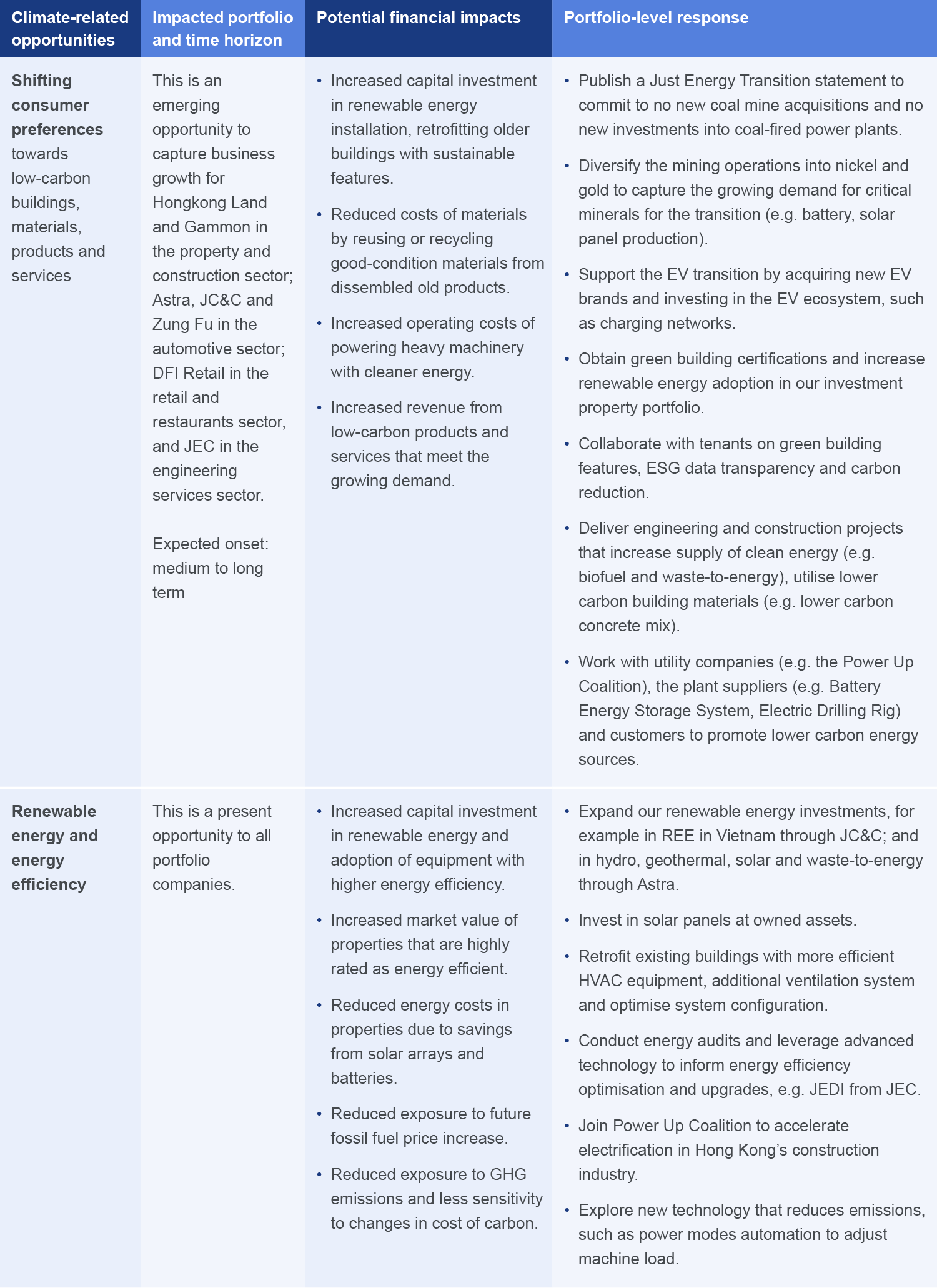
Climate-related opportunities under the low-emissions scenario
The assessment of climate-related opportunities was based on the assumptions that climate change policies and shifting consumer awareness of climate change will drive greater demand for sustainable solutions.
Each of our portfolio companies allots a budget to fund sustainability and climate-related activities. The budgets are approved by the Chief Finance Officers of the Company and our portfolio companies. The Group has a framework for a systematic incorporation of sustainability considerations, including climate risks, into capital allocation decisions – a framework which we continue to enhance.
Considering business growth, challenges of unproven technology innovations and initiative deployment timelines, we understand that our emission reduction and climate resilience pathway will not be a linear process.
We are increasingly focused on ensuring that our investment opportunities align with our sustainability goals. We continue to support Asia’s shift to clean energy, including JC&C’s investment in REE which has a growing renewable energy portfolio in Vietnam, Astra’s development of EV infrastructure in Indonesia, and our motor portfolio companies’ distribution of new energy vehicles in Hong Kong, Singapore and Indonesia. In addition, in 2025, Astra progressed its used car strategy, with US$120 million investment by Toyota for 40% in Astra Digital Mobil. United Tractors also completed the acquisition of an additional 30.6% stake in Supreme Energy Sriwijaya to expand the renewable energy portfolio.
Risk management
We have incorporated the best practices of enterprise risk management into the process of climate risk identification, assessment and management, combining a bottom-up process with a top-down strategic view. The sustainability teams in each of our portfolio companies are responsible for climate risk management and provide a business-specific climate risk perspective to their risk management teams. Operations or property management teams play a critical role in implementing asset-level resilience measures to ensure day-to-day operational continuity and long-term asset protection.
Both physical and transition risk reports from the 2021 and 2022 climate risk assessments have been provided to the portfolio companies to explore the implications and develop mitigation measures to minimise the impact including property damage and business interruption. As with other principal risks and uncertainties, material climate risks and mitigation measures are reported to the ARM team by the portfolio companies and consolidated into the Group risk register to formulate a risk heat map, which guides risk prioritisation. The risk heat map is reported to the Audit Committee twice a year. Climate risks are featured in the Group’s Principal Risk and Uncertainties.
We have developed a Group approach to the integration of both physical and transition climate risks into the existing risk management process and business risk register, which aligns with best practices defined by COSO5, TCFD, and ISO 3001.
A climate risk sub-register has been created to formalise current efforts and monitoring across the portfolio companies. It is a full list of climate risks and opportunities over the short, medium and long-term, which facilitates the discussion and knowledge transfer on climate matters between teams. Sustainability and risk management teams will monitor the risk signals (e.g. carbon price policies) and evaluate the impact of each climate risk under different climate scenarios. Once the climate-related risk events/drivers materialise and are significant, they will be included in the business risk register to keep climate-related risk causes monitored by the respective risk owners ensure accountability. For example, supply chain disruption is an existing business risk managed by procurement directors at each portfolio company, but climate risks could intensify the uncertainties of logistics which is the procurement director’s responsibility, assisted by the sustainability and risk management teams. This integrated approach ensures that we remain agile and responsive to the interconnected challenges posed by climate change, fostering long-term value creation and sustainable growth.
The impact assessment for climate risks is currently based on external research and management judgements. Climate change modelling and more sophisticated financial impact assessments will be conducted, based on a common set of scenarios and assumptions at a later stage when more data points are transparent and available in the market.
To develop a climate action culture across our portfolio companies, climate risk is frequently included in internal risk management training and conferences. Most of our portfolio companies are actively attuning their business capabilities to better evaluate and respond to climate risks. The Group will continue to guide the discussion with the portfolio companies on the impact of climate risks in relation to other business risks.
Please refer to the Risk Management and Internal Control section of this Report for details of the Group’s ERM framework.
5The Committee of Sponsoring Organizations (COSO)
Metrics and targets
Our GHG emissions guidance is aligned with the GHG Protocol for measuring scope 1 and 2 emissions across the Group. We provide the performance of our GHG emissions by portfolio company in our annual Sustainability Report. At the time of publication of this Report, the Group’s 2025 performance is still undergoing external assurance, and further details will therefore be provided in the forthcoming Sustainability Report 2025. The Group’s 2024 performance is extracted in the table below:
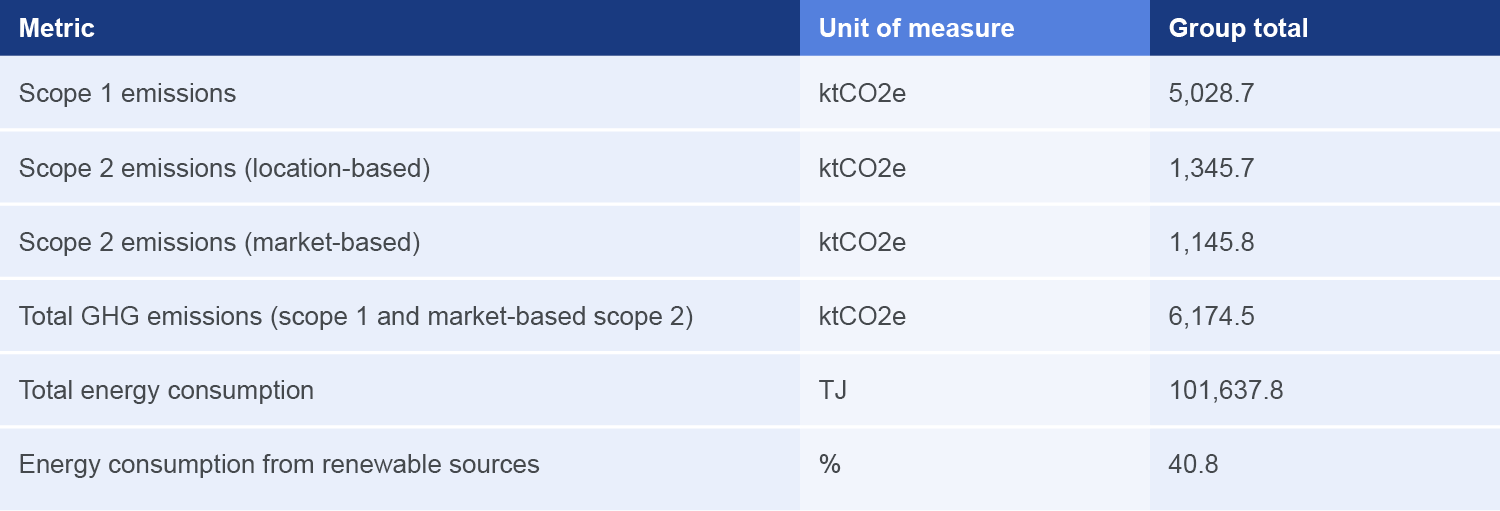
*Total scope 1 and market-based scope 2 (gross emissions excluding carbon credits) was subject to independent limited assurance by PricewaterhouseCoopers as part of our 2024 Sustainability Report which is available on our website.
We have developed an inventory of our scope 3 emissions and our portfolio companies have identified their scope 3 hotspots. Some of our portfolio companies, such as Hongkong Land, DFI Retail and Gammon, have publicly disclosed their scope 3 data and related action plans.
Decarbonisation has been a key focus area and progress on decarbonisation targets is one of the success measures of the Group’s annual strategic priorities. Executive directors’ contributions to the Group’s annual objectives are linked to their remuneration. Details of the mechanism is reported in the Remuneration Report section of this Report. There is a framework to guide decarbonisation efforts across the Group towards our ultimate ambition of net-zero by 2050, in line with climate science. Due to the wide geographic spread of our investments, there is significant variation in the regulatory and policy environments affecting our portfolio companies, which have implications for the feasibility and pace of potential decarbonisation initiatives. To account for Jardines’ complexity, we have segmented our companies under two pathways towards the net-zero goal.
The first, the Decarbonisation Pathway, expects companies to align their carbon reduction targets with credible, scientific approaches, including SBTi and sector-specific methodologies consistent with a 1.5°C trajectory. Hongkong Land, DFI Retail, Gammon, Hactl, Jardine Engineering Corporation, Zung Fu, Jardine Restaurant Group, and PT Astra Graphia Tbk have had their near-term decarbonisation targets validated by SBTi.
The second, the Transition Pathway, expects the Group’s mining and energy portfolio, which have business continuity risks due to significant challenges and unclear decarbonisation pathways, to develop a credible transition plan for growth in a low-carbon economy. A successful transition depends on critical factors, including the commercial viability of new abatement technologies, the development of supportive infrastructure, and a clear, dynamic and responsive policy landscape.
The success of the Group in reducing carbon emissions is dependent on the decarbonisation progress by each portfolio company. In 2023, all portfolio companies completed the development of scope 1 and 2 decarbonisation targets and roadmaps to 2030, most of which are 1.5°C-aligned. The roadmaps include the details and timelines of different decarbonisation levers relevant to their respective industry sectors. Every company is responsible and accountable for delivering on the agreed targets. The roadmaps are reviewed annually to track progress and to update based on actual performance to determine future actions and priorities.
The Group’s transition plans to achieve its ultimate ambition of net-zero by 2050, rely on the efforts and collaboration of the portfolio companies. In the short term, we focus on decarbonising our scope 1 and 2 emissions following the established roadmaps. Different initiatives such as energy efficiency measures and staff engagement to drive behavioural change are already in place. In the medium term, we will continue to reduce our scope 1 and 2 emissions primarily through renewable energy procurement. Our portfolio companies also started to address their scope 3 emissions through supplier engagement, scaling partnerships, product innovation and strategic investment. In the long term, we will aim to leverage emerging technologies and innovations to address the remaining gaps.
Consistency with TCFD requirements
Our climate-related disclosures meet the reporting requirements for UK listed companies in the Transition Category, and are consistent with the TCFD recommendations on:
- governance – all recommended disclosures;
- strategy – disclosures (a) and (b);
- risk management – all recommended disclosures;
- metrics and targets – disclosures (b).
We acknowledge that we are not fully consistent with TCFD requirements, including the additional guidance for all sectors published in October 2021. As an investment company of a highly diversified portfolio, it will take some time for us to fully consider and plan the actions necessary to achieve alignment. We will continue to move forward and improve our disclosure in the coming years. For strategy disclosure (c), we have analysed the climate scenarios to identify certain climate risks and opportunities and provided the qualitative information of financial impact. We have also enhanced the asset resilience to physical climate risks under the high emission scenario. However, we are still in progress to adjust our business strategy and assess its resilience to climate risks under the low emissions scenario. This is a continuous collaboration between the Sustainability, Finance and Investment & Portfolio Management teams in the short-medium term. For metrics and targets disclosure (a) and (c), since our portfolio includes a variety of sectors, setting portfolio-wide metrics and targets to assess climate-related risks and opportunities is complex. We will continue exploring the metrics which are applicable across different portfolio companies and industries in the short-medium term.
Responsible consumption
As Asian economies continue to expand and deepen their integration into global supply chains, the pressure on natural ecosystems grows. Businesses that adopt models grounded in the responsible use of natural resources are better positioned to safeguard and unlock economic value. Embedding nature-positive principles into business strategy mitigates risks and opens pathways for innovation, and sustainable growth opportunities.
Our portfolio companies come together through our Responsible Consumption Working Group (RCWG), to collaborate and drive strategic alignment across our portfolio companies. The RCWG continues to meet on a regular basis, sharing knowledge on emerging topics, progress work on the implementation of ongoing waste management initiatives and to establish a coordinated approach to further enhance circularity efforts across the Group. Through closer collaboration between our portfolio companies, we create more value as a Group by leveraging our synergies and cross-sectoral expertise. Our portfolio companies are exploring collaboration opportunities, within the portfolio and externally across their respective value chains, to promote circularity and build transparent, collaborative relationships. These efforts collectively help to manage nature-related risks and dependencies while creating economic value.
Jardines is closely monitoring global developments, including the Task Force for Nature-related Financial Disclosure (TNFD) and the increasing levels of interest in biodiversity conservation from stakeholders. In the coming year, we will continue to provide training and education on nature and biodiversity for our portfolio companies through the RCWG.
We remain closely engaged with our portfolio companies and relevant stakeholders to address specific biodiversity issues, including supporting the long-term preservation of the Tapanuli orangutan in the area around the Martabe mine in Indonesia. More up-to-date details can be found in the statement on the Martabe mine and Tapanuli orangutan in the Sustainability section of the Company’s website.
Social inclusion
Contributing to the sustainable growth of our markets and supporting the people in our communities has been a longstanding commitment at Jardines. Our community investment strategy focuses on positive contributions towards the issues of education, health, with a keen focus on mental health and livelihoods.
Through our portfolio companies, we touch the lives of millions of people daily, providing places to live and work, and meeting the everyday needs of consumers. While we connect with our communities through our portfolio companies, we proactively offer support to less privileged individuals and community groups.

A guided visit to Maxim’s centre for persons in recovery in partnership with New Life Psychiatric Rehabilitation Association as part of the Cross Group Volunteering Programme